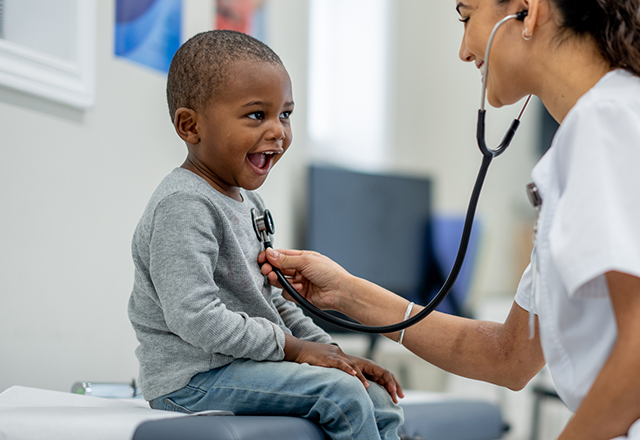
I learned something quickly on my pediatrics rotation — children were gross. They drooled on my stethoscope, crawled on the floor, and scratched their behinds before picking their noses. They screamed when getting changed. They ran around exam rooms. They were so often sniffling, snotty and congested, especially in the winter months. Every weekend, I developed a cold, which miraculously resolved by Monday.
And yet, these children deserved to feel well. I could see the kid I had once been, eating sand in the playground, wiping my nose on my sweater, and living by rules other people made. It was unexpectedly fulfilling and healing to practice caring for children in all their messiness. The inherent grace and positive regard we extend to children is something we can bring to the practice of medical care for adults. In fact, it is something we can even bring to the way we speak to ourselves.
Being around children who were mostly well in pediatric primary care was different from my other clerkships. In internal medicine, my patients were older adults whose organs were starting to fail. In surgery, my patients had a single structural problem that was fixed by the knife. In Gyn/Ob, my patients were younger and healthier, but the birth process still felt like an esoteric sphere of knowledge. To an extent, I had internalized that medicine was more worthy or legitimate when it served sicker patients, or the extremes of life and death.
None of the kids I saw were seriously sick, in the way we are taught to classify patients as “sick” or “not sick.” But I could still understand that they were distressed by a fever, or embarrassed about something that had happened at school, or annoyed by a certain teacher. These were trivial problems under the clinical judgment and ability to triage I was developing. Some people find well-child visits routine, repetitive and mundane. But taking care of well children gave me something.
It gave me the ability to see life outside the perspective of medicine.
It let me shift out of this second language I was learning.
At this point in my life, I have more experience with being a child than being an adult, but it’s easy to forget what it was like to be a child. In my rotation, I saw not just the patients in front of me, but the whole long life they would live. We were working for the best for these children, who required individually packaged snacks and did not sleep through the night and sometimes brought the flu home. I learned how three-year-olds were both adorable and also tiny tyrants with no mercy. Children do not have to be good, or convenient, to come into the clinic and receive care. They do not have to do anything to deserve health. The only things that mattered were how they were feeling and who they were becoming.
Related content
- On Learning Medicine
- Matchmaker, Matchmaker, Make Me a Match
- Applying for Residency: Parts One, Two and Three
Want to read more from the Johns Hopkins School of Medicine? Subscribe to the Biomedical Odyssey blog and receive new posts directly in your inbox.