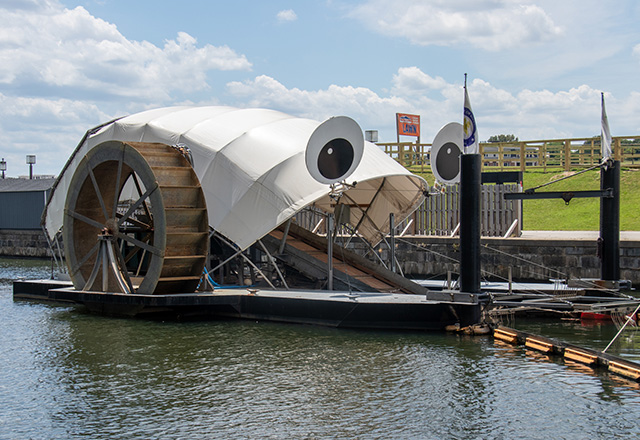
During your time in Baltimore, you may come upon a barge with a wagon cover and googly eyes floating on the water. This is one of the members of our city’s beloved Trash Wheel Family: Mr. Trash Wheel in the Inner Harbor, Professor Trash Wheel (a woman in STEM) in Canton, Captain Trash Wheel in South Baltimore, and Gwynnda the Good Wheel of the West at Gwynn Falls.
A trash wheel is exactly what it sounds like. Two containment booms funnel trash toward the mouth of the trash wheel, where trash is carried up a conveyor belt into a dumpster on board. The whole system is powered by a large water wheel and solar panels. Particularly after it rains, the trash wheels are able to intercept trash in Baltimore’s waterways. They are responsible for removing about 500 tons of trash from the harbor each year. Mr. Trash Wheel, Professor Trash Wheel and Gwynnda the Good Wheel of the West are overseen by the Waterfront Partnership of Baltimore; Captain Trash Wheel is overseen by the Maryland Port Administration.
The trash wheels have become local celebrities with anthropomorphized googly eyes and personalities. Mr. Trash Wheel was even drafted to join the Baltimore Ravens as a wide receiver (of trash), leading to a partnership that has him currently sporting a purple Ravens jersey. Fans can buy T-shirts, wooden trash wheel model kits, and even themed beverages at a local brewery. Recently, Humans of Baltimore came together to make a Mr. Trash Wheel music video to be unveiled on his 12th birthday, which happens to be Earth Day.
The Trash Wheel family also pushes for change in waste management in Baltimore. Every year, the Waterfront Partnership hosts an annual trash count, where volunteers sort through one dumpster’s worth of collected trash to understand what is ending up in Baltimore’s waste stream. This data has supported legislation to reduce trash burden, such as a bill in 2018 to ban polystyrene foam food containers. Currently, the Waterfront Partnership is using data from the trash count to advocate for a statewide Bottle Deposit Program (the “Bottle Bill”), which has been introduced during this ongoing Maryland legislative session.
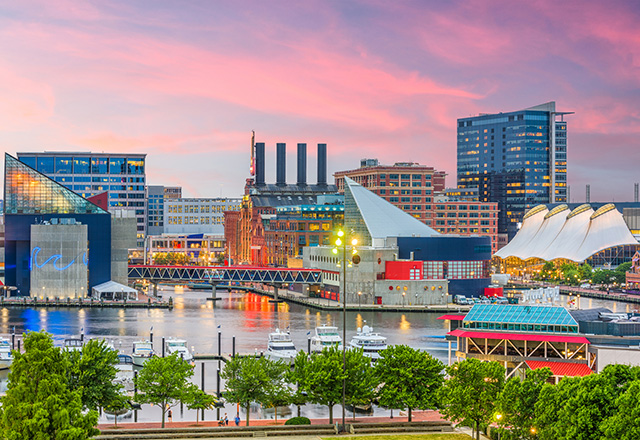
Water is the heart of Baltimore, from its beginnings as an industrial port city to all the people who find joy by the water now. The Inner Harbor, particularly, is home to Baltimore treasures, such as the National Aquarium, winter’s Christmas Village, summer concerts and an annual flotilla. The Trash Wheel Family is an example of creative urban green infrastructure that builds community while making our waterways healthier and more accessible.
Related content
- A Homegrown Solution to a Homegrown Problem
- Baltimore Through Egyptian Eyes: A Day of Firsts
- On the Run in Baltimore
- A Semi-Quantitative Analysis of the Cats of Baltimore
Want to read more from the Johns Hopkins School of Medicine? Subscribe to the Biomedical Odyssey blog and receive new posts directly in your inbox.