
Research was something my uncle and I shared, even when our sciences spoke different languages.
My uncle, Edwin Junior Saltzman, was a NACA/NASA engineer whose work helped push the boundaries of aeronautics and spaceflight. I became a biologist drawn to metabolism and human physiology. We were both researchers, but the problems we studied seemed to live in different worlds: aircraft drag and hypersonic flight on one side, cells, proteins and metabolites on the other. And yet, the logic underneath both fields was more similar than it first appeared.
Recently, in Washington, D.C., those worlds folded into one another. I had just given a major presentation on my postdoctoral project at the 2026 International MPS World Summit, a meeting that brought together scientists, engineers, regulators, industry leaders and emerging voices to discuss where MPS stand now and where the field is going next.
Microphysiological systems, or MPS, are engineered platforms that use living cells to model key features of human tissue and organ function. For someone like me, working to build better models of metabolic disease, their promise is not that they reproduce the whole body all at once. Their promise is that they allow us to study selected pieces of human biology with more context than a flat dish and more control than a whole organism. That matters because metabolism is not confined to one tissue. Glucose regulation, inflammation, hormone signaling, lipid handling and drug response emerge from communication among organs. MPS give us a way to preserve parts of that communication while still controlling the inputs, measuring the outputs and asking what each component contributes to the larger system.
In that sense, MPS is a young field built around an old scientific problem: How do we study complexity without losing sight of the parts? That is what makes the field so exciting to me. It is still evolving, but it is already blossoming in remarkable ways, from alternative disease models to tissue chips being prepared for spaceflight. More than a new technology, MPS offers a way to approach human biology as dynamic, interconnected and complex, but still measurable.
Working with MPS taught me to approach biology through an engineer’s lens: by designing the conditions, studying the parts, testing the interactions, and refining the system over time. We design the environment around the tissues: the flow, geometry, materials, timing and movement of nutrients and signals. We also build the biology piece by piece, choosing which cell types belong together, how they mature, how they communicate and what features of a tissue or disease need to be represented. The scale was different from my uncle’s world, but the logic felt familiar: Complex systems become more understandable when they are built, tested and improved piece by piece.
MPS did not just bring me into a new field. It gave me a way to understand the intellectual world my uncle had inhabited all along. He helped devise and demonstrate methods to measure boundary-layer behavior and skin friction in flight up to Mach 6, and NASA credited him with pioneering the concept of evaluating aircraft performance component by component. His methods were used across experimental programs including the X-1, X-15, X-29, and lifting bodies, influencing the design of transonic, supersonic and hypersonic vehicles.
Different field, different scale, different era, and yet the question feels familiar: How do we understand a complex system well enough to move it safely into the future?
At the MPS summit, NASA’s AVATAR program for Artemis II brought that connection into focus. AVATAR, A Virtual Astronaut Tissue Analog Response, uses MPS devices seeded with astronauts’ own cells to study the effects of space radiation and microgravity on human biology. The idea still gives me chills: Human biology is now traveling into space not only inside astronauts, but beside them, in living models built to help us understand what space does to the body. It was a striking example of what MPS can do: make human biology measurable in places where traditional experimentation is limited.
Yet, engineering the impossible is rarely one dramatic leap. Like the experimental aircraft programs that came before them, MPS will advance through disciplined testing, careful validation and a willingness to break overwhelming questions into measurable parts.
After the MPS summit, I went to the Smithsonian National Air and Space Museum to see the aircraft most closely tied to my uncle’s life’s work. When I asked the information desk staff where to find the X-15, they silently pointed upward. There it was, suspended directly above me: the black, rocket-powered aircraft that helped define a generation of experimental flight and served as a critical bridge between aviation and human spaceflight.
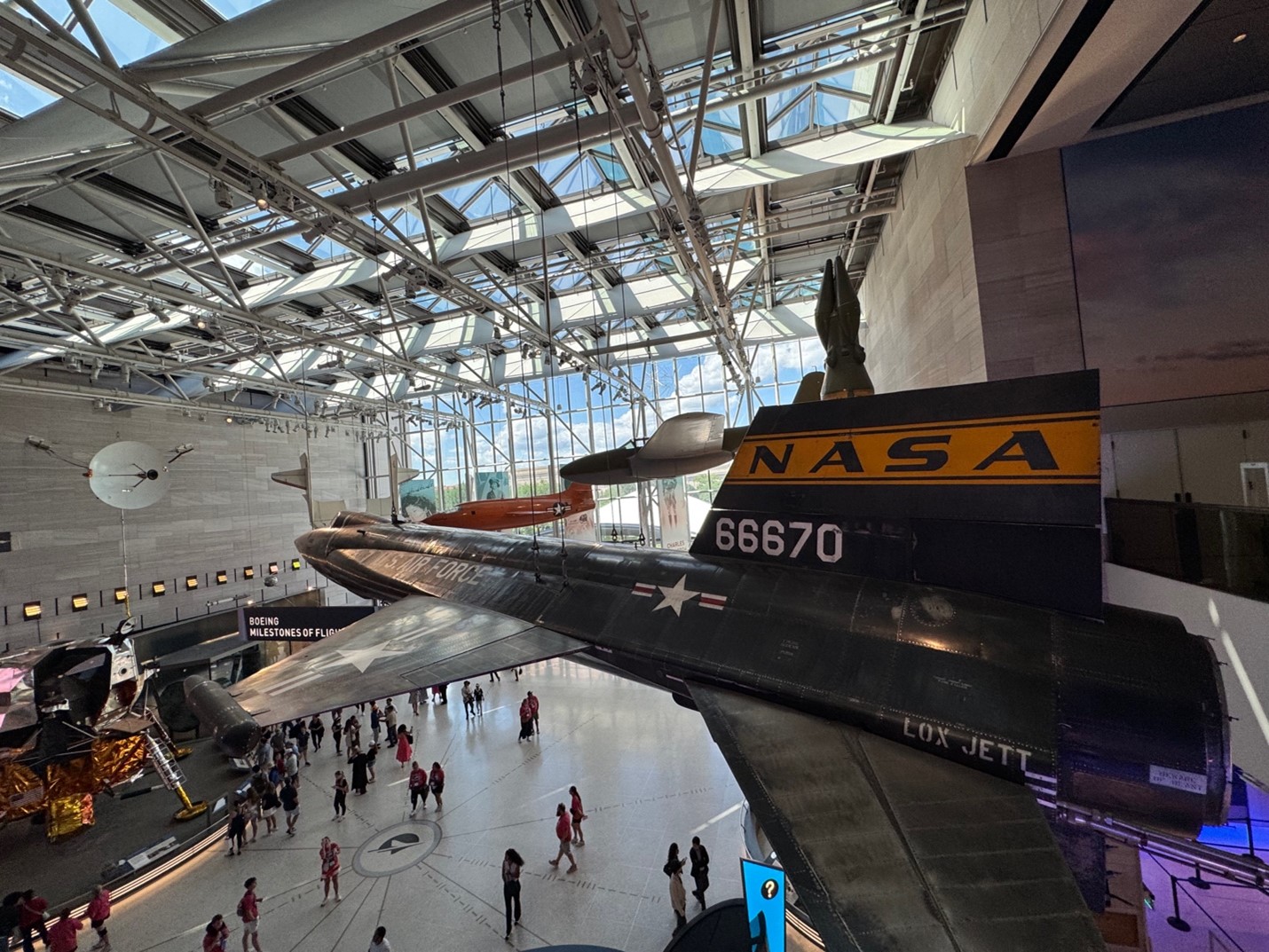
The irony felt almost too perfect. My uncle had been an archive of information about the people, aircraft and decisions that shaped flight research, and now the X-15 was suspended directly above the place visitors went to ask questions. For a man who loved questions, deep conversation and the pursuit of understanding, it felt like a message clear enough even I could not miss: Keep going, you are on the right track. You are in the right place at the right time.
Standing beneath it, I felt the two stories become one. I had just heard NASA scientists describe personalized MPS traveling with Artemis II astronauts around the moon. Now I was looking up at an aircraft that my uncle had helped make possible, one version of the impossible made real by people willing to break uncertainty into questions they could test.
My uncle and I spoke different scientific languages for most of my career. But standing there, I realized that MPS had taught me some of his. Finally, we could have talked about the same things: how you validate a system piece by piece, how you design for what you cannot fully predict, how you make the impossible incrementally possible.
That day at the museum gave me a glimpse of the conversation I wish I could have had with him about my work. I never got to have it, but standing beneath the X-15, I could feel its shape. The message felt unmistakable: My own impossible was already in motion.