Long before it became a subject of textbooks, insulin had already demonstrated something profound: that biology itself could be transformed into medicine.
Discovered in 1921 by Frederick Banting and Charles Best under conditions far more limited than today’s laboratories, insulin became the world’s first true biotherapeutic, a biological solution to a biological problem. It did more than treat disease. It established a philosophy of medicine rooted in precision, empathy and lifesaving intent, and it set in motion an entire field that continues to redefine how we approach human health.
For those who depended on it daily, insulin was more than a discovery. It was possibility and hope. Understanding this history brings clarity. It reveals how scientific breakthroughs often extend far beyond laboratories, quietly shaping lives and how lived experience can, in turn, shape scientific direction. In this way, survival can evolve into purpose.
Type 1 diabetes (T1D) is often described clinically. But lived T1D — especially a decade or more ago in India — was something very different. It meant waking each day with an unspoken assessment of the body. It meant sensing a slight tremor in the hands and wondering what it signaled. It meant recognizing that rest, focus or sleep could sometimes carry uncertainty. Without advanced monitoring technologies, without automated alerts or digital safety nets, daily management relied almost entirely on vigilance, discipline and judgment.
There was, however, one constant. Insulin, a single biological molecule that kept me alive.
During this vulnerable period, mentorship became as critical as medicine. As a doctoral student still finding my academic footing, my Ph.D. mentor, Prof. Jayant Khandare, provided steady guidance during that period. That experience shaped my understanding of scientific leadership that the most meaningful guidance is often given before strength is proven.
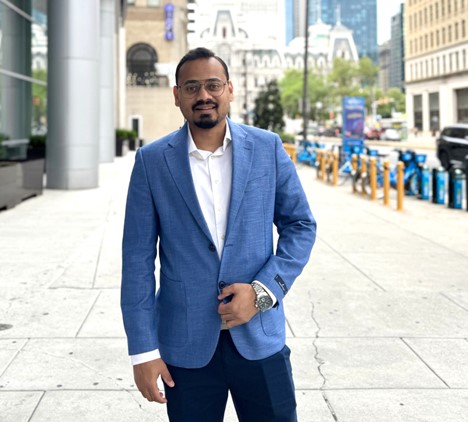
Years later, standing in the Center for Nanomedicine at the Johns Hopkins University School of Medicine, surrounded by technologies and ideas shaped by generations of discovery, those early memories often resurface. This is an institution built on scientific courage, where physicians and scientists have translated fundamental discoveries into transformative therapies, where Nobel Prize-winning work has redefined medicine, and where innovation is driven by an unwavering commitment to patients.
In this environment, I work in drug delivery and biotherapeutics, designing systems that aim to respect biology rather than overpower it. My research focuses on targeted nanocarriers — technologies that rely on disease biology itself to guide therapy with precision and restraint.
Here, the legacy of insulin feels present not as history, but as philosophy. I am reminded how far biotherapeutics has come, from a single protein extracted under extraordinary circumstances to sophisticated platforms capable of navigating complex biological systems. And I am equally aware of how much remains to be done.
Biotherapeutics is ultimately about more than molecules. It is about reducing uncertainty, restoring balance, and enabling people to live fully despite chronic disease. It is about translating scientific understanding into quiet reliability, therapies that work consistently, predictably and safely.
The future lies in building treatments that are not only innovative, but deeply human — guided by biology, informed by experience and designed with empathy at their core.
Related Content
- Have You Thanked an Oyster Today?
- Entangling the Concept of What is Alive: The Obelisks
- Targeting Diabetes with a High-Fiber Diet: It’s All in Your Gut!
Want to read more from the Johns Hopkins School of Medicine? Subscribe to the Biomedical Odyssey blog and receive new posts directly in your inbox.